Ace Your Job Interview in 2026: Complete Guide for Success
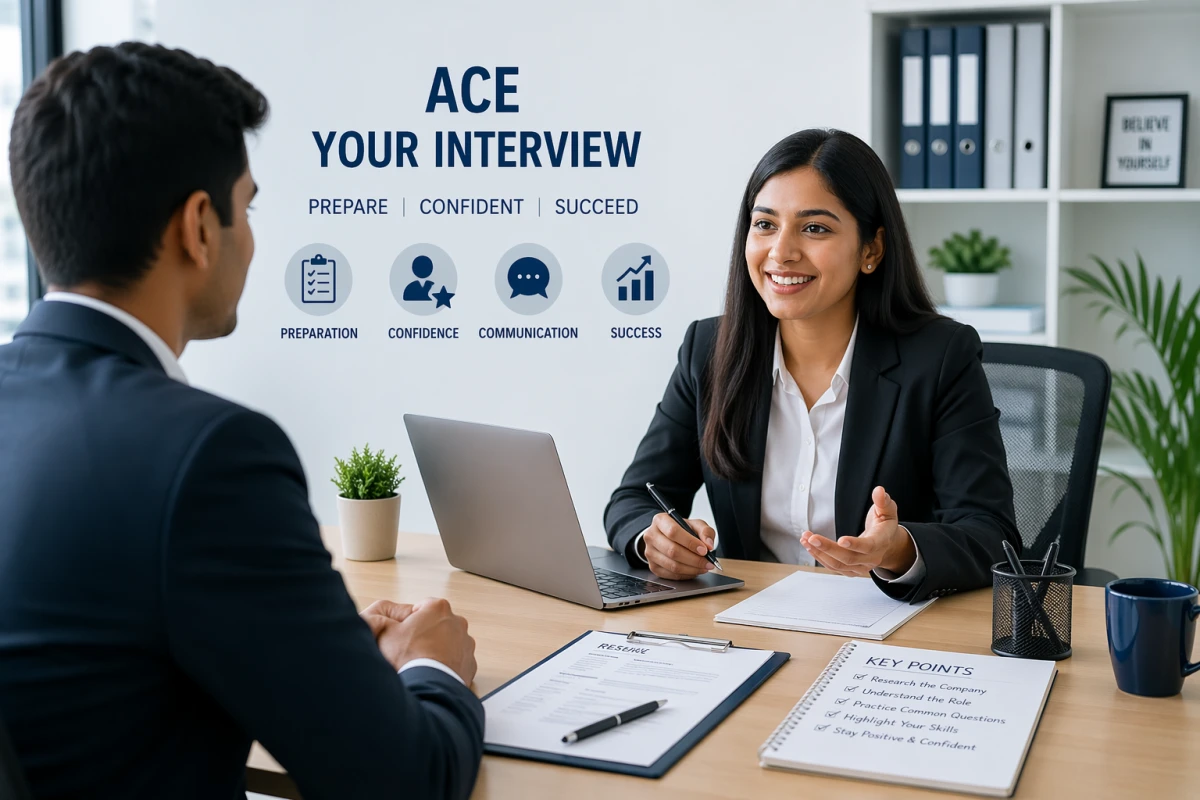
In today’s evolving job market, interviews have become more than simple question-and-answer sessions. Employers are now using structured interviews, behavioral assessments, and even AI-based screening tools to identify the best candidates.
Whether you are a student, fresher, or experienced professional, preparing strategically for interviews is essential. This guide will help you understand what employers expect and how you can stand out in 2026.
Who This Guide Is For
- Students preparing for internships or first jobs
- Fresh graduates entering the workforce
- Professionals looking to switch careers
- Job seekers aiming to improve interview performance
1. Understand What Employers Really Want
- Employers today focus on practical skills and problem-solving ability, not just academic qualifications. They want to see how you think, react, and handle real-world challenges.
- Communication skills play a major role—your ability to express ideas clearly and confidently can directly impact hiring decisions.
- Cultural fit is equally important. Companies prefer candidates who align with their values, team dynamics, and work environment.
- Adaptability has become a key hiring factor, especially in 2026 where industries are rapidly evolving due to technology and automation.
- Many companies use structured interviews and AI tools, so your answers must be clear, relevant, and result-oriented.
2. Research Like a Pro Before the Interview
- Visit the company’s website and understand its mission, vision, products, and services in detail.
- Carefully analyze the job description to identify the exact skills and responsibilities expected from you.
- Stay updated with recent company news, achievements, or industry developments to show awareness during the interview.
- Research industry trends so you can give future-focused answers that demonstrate long-term thinking.
- Strong research helps you tailor your answers and align them with the company’s goals, increasing your chances of selection.
3. Use the STAR Method to Structure Your Answers
- The STAR method helps you deliver clear and professional responses to behavioral questions.
- Start with the Situation to provide context and background.
- Explain the Task to highlight your responsibility in that situation.
- Describe the Action you took to solve the problem or complete the task.
- End with the Result, focusing on measurable outcomes or achievements whenever possible.
- This structured approach makes your answers more impactful and easier for interviewers to evaluate.
4. Practice Common Interview Questions
- Prepare a strong and concise answer for “Tell me about yourself,” as it sets the tone for the interview.
- For “Why do you want to work here?”, avoid generic responses and base your answer on your research.
- When discussing strengths and weaknesses, be honest but strategic—show how you are working on improving yourself.
- Practice behavioral questions related to teamwork, challenges, and problem-solving using real-life examples.
- Avoid memorizing answers—focus on understanding key points and delivering them naturally.
5. Improve Your Body Language and Confidence
- Maintain eye contact to show confidence and build trust with the interviewer.
- Sit with proper posture to reflect professionalism and attentiveness.
- Use natural facial expressions and a slight smile to appear approachable and positive.
- Avoid nervous habits like fidgeting, excessive hand movement, or looking distracted.
- Confidence is about clarity and calmness, not perfection.
6. Ask Smart Questions at the End
- When given the opportunity, asking thoughtful questions shows genuine interest in the role.
- You can ask about performance expectations, team structure, or growth opportunities.
- Questions about the company’s future plans or challenges demonstrate strategic thinking.
- Asking about the next steps in the hiring process reflects professionalism.
- Avoid saying “I have no questions,” as it may signal a lack of interest.
7. Follow Up After the Interview
- Send a thank-you email within 24 hours to show appreciation for the interviewer’s time.
- Reaffirm your interest in the role and briefly highlight why you are a good fit.
- Mention something specific discussed during the interview to personalize your message.
- A professional follow-up can leave a lasting impression and improve your chances of selection.
Interview Trends in 2026 You Should Know
- AI-driven candidate screening is becoming more common
- Video interviews are now a standard hiring practice
- Skills-based hiring is replacing degree-based hiring in many industries
- Employers value adaptability, digital skills, and learning ability more than ever
Conclusion
Interviews are your opportunity to showcase your skills, personality, and potential. With proper preparation, structured answers, and confidence, you can turn any interview into a success.
The key is to stay authentic, be well-prepared, and continuously improve your approach.
#InterviewTips #InterviewPreparation #JobInterview2026 #CareerAdvice #JobSeekers #StudentsCareer #GetHired #CareerGrowth #InterviewSkills #FreshersJobs #JobSearchTips #ProfessionalSuccess #InterviewGuide #CareerSuccess #HiringTrends2026