

In today’s competitive job market, simply listing your skills is not enough. Employers don’t just want to know what you’ve done—they want to understand how you think, solve problems, and create impact.
That’s where storytelling becomes your strongest advantage.
In 2026, candidates who can present their experience as clear, structured, and engaging stories are far more likely to stand out and get hired faster. This guide will help you understand how to use storytelling effectively in interviews, resumes, and professional conversations.
Storytelling transforms ordinary answers into memorable ones. Instead of giving generic responses, you create a narrative that:
For employers, storytelling also makes it easier to evaluate a candidate’s practical skills and decision-making ability.
It doesn’t mean exaggerating or creating fake stories. It means:
You are not just answering questions—you are positioning yourself as the right candidate.
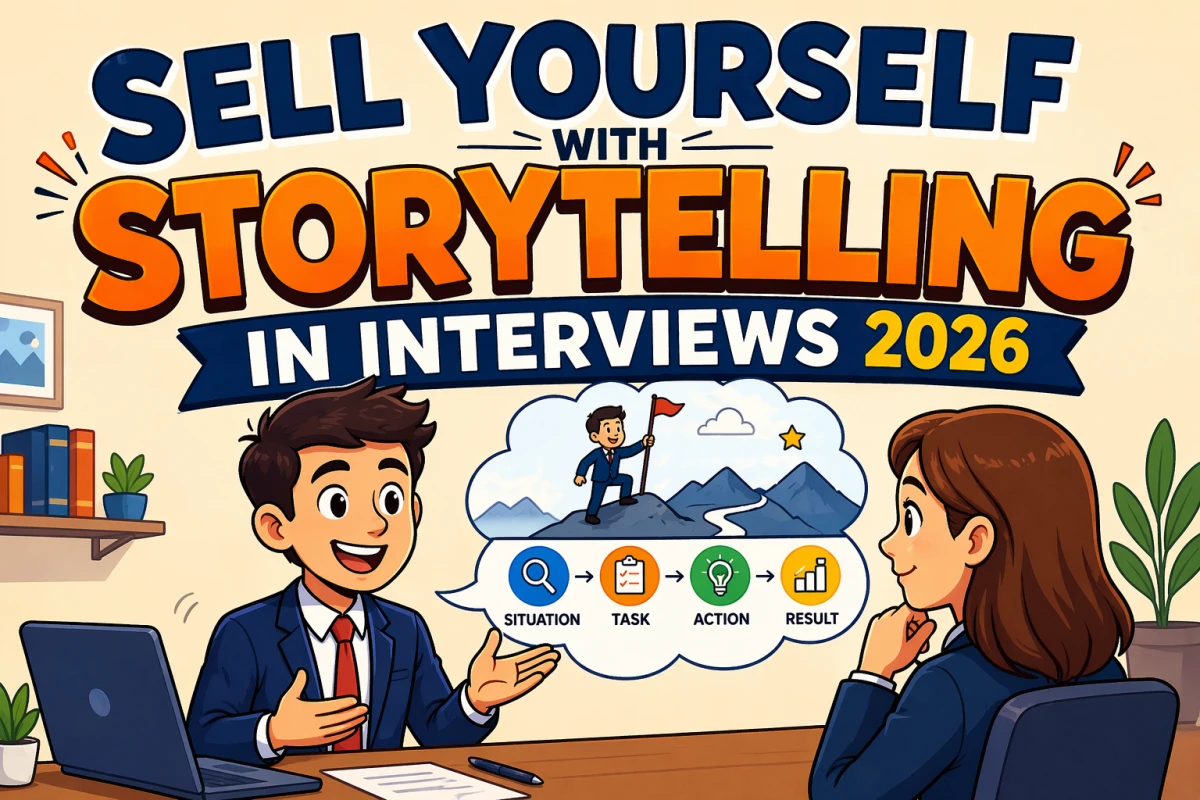
The most effective storytelling technique in interviews is the STAR method:
Instead of saying:
“I handled a project successfully.”
Say:
“I was assigned a project with a tight deadline (Situation). My task was to complete it within 5 days (Task). I created a structured plan and coordinated with my team (Action), which helped us deliver the project 1 day early and improved client satisfaction (Result).”
This approach makes your answer clear, professional, and impactful.
Use storytelling to answer behavioral questions like:
Even your resume can reflect storytelling by:
When introducing yourself, don’t just say your role—share your journey:
To create powerful interview stories:
A strong story is clear, focused, and result-driven.
Candidates who use storytelling effectively:
You can explore job opportunities and apply easily through platforms like CareerFinders and SearchTalents, where having a strong profile and clear communication increases your chances of getting shortlisted.
Selling yourself with storytelling is not about impressing with big words—it’s about making your experience meaningful and memorable.
In 2026, employers are looking for candidates who can communicate clearly, think critically, and show real impact. Storytelling helps you do exactly that.
If you can tell your story well, you don’t just answer questions—you create a strong personal brand that employers remember.