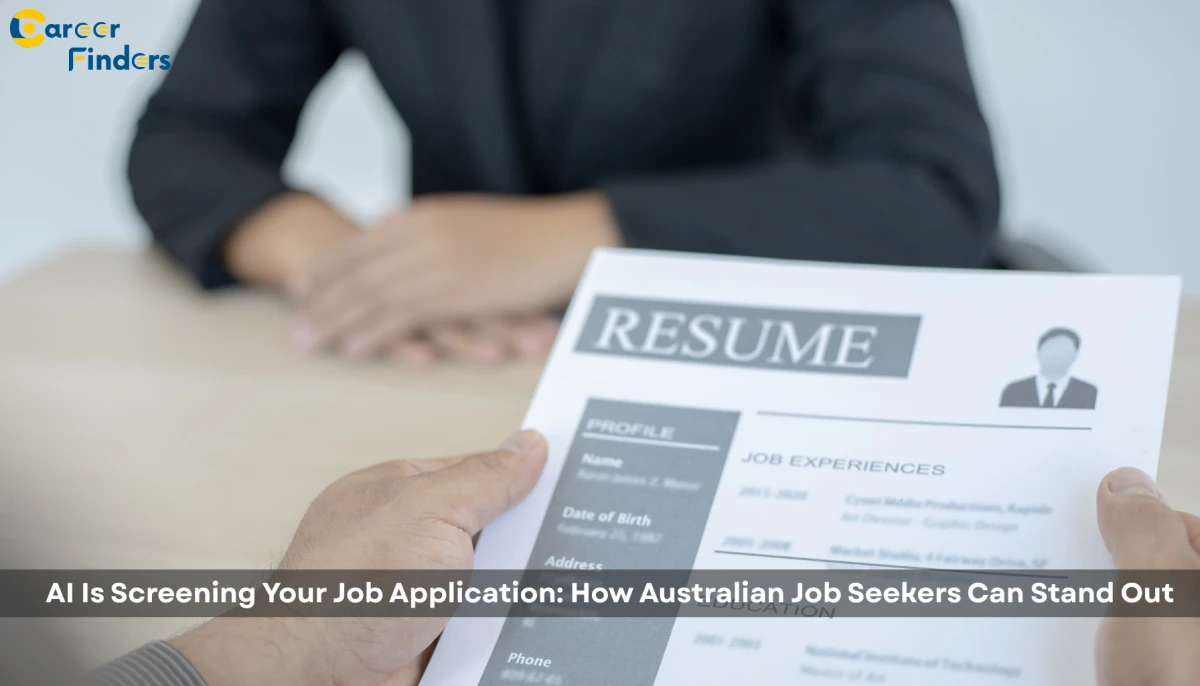
Artificial intelligence is already shaping recruitment. It influences how job advertisements are written, how applications are sorted and which candidates progress. Jobs and Skills Australia says jobseekers increasingly interact with tools that scan, score and shortlist applicants, while SEEK reports that employers are using AI for résumé screening, job-description writing and interview scheduling.
For Australian job seekers, this creates a new challenge. Your application may need to communicate clearly with both technology and a human recruiter. Standing out does not mean tricking an algorithm. It means presenting your experience clearly, matching your evidence to the role and keeping your application genuine.
How AI Is Changing Recruitment
Employers can receive hundreds of applications for one position. Automated systems help organise candidates, identify relevant skills, ask screening questions and arrange interviews.
SEEK’s workplace research found that employers were open to using AI for writing job descriptions, screening résumés and scheduling interviews. Candidates were also using AI to write résumés, prepare cover letters and practise for interviews.
This has created an AI-versus-AI environment. Employers use technology to manage application volume, while candidates use it to apply faster. ABC News reported that recruiters are seeing many polished AI-assisted applications with similar wording, making genuine achievements harder to identify.
1. Start With the Job Advertisement
The strongest application begins with the job advertisement, not with an AI tool.
Read the full advertisement and identify the employer’s main requirements. Look for repeated skills, qualifications, licences, software knowledge and personal qualities. Separate mandatory requirements from desirable ones.
A customer service role may mention complaint resolution, phone enquiries, database updates and teamwork. Your résumé should not simply say “good communication skills.” It should show where you handled customers, solved problems or updated records.
Use the employer’s terminology naturally when it accurately describes your experience. Do not copy complete sentences or add skills you do not possess.
Recruitment systems may search for words and phrases connected to the role, but adding every keyword from the advertisement will not automatically make an application stronger. The information still needs to be relevant, accurate and supported by evidence.
2. Use a Simple Résumé Format
A visually impressive résumé is not always easy for recruitment software to read. Complex layouts, decorative graphics, multiple columns and unusual headings can make information harder for some systems to interpret.
Use standard headings such as:
Professional Summary
Work Experience
Education
Skills
Certifications and Licences
Write job titles, employer names and employment dates clearly. Keep important contact details in the main document rather than inside images, headers or footers.
Choose a readable font and save the file in the format requested by the employer. Always follow the instructions included in the job advertisement, because employers may use different recruitment platforms and document requirements.
Your résumé should also be easy for a human recruiter to scan quickly. Place the most relevant information near the beginning and avoid long paragraphs that hide important achievements.
3. Replace Claims With Evidence
AI tools may identify keywords, but recruiters still need proof.
Statements such as “hard-working,” “team player” and “excellent communicator” are too broad on their own. Strengthen them with examples showing what you did.
Instead of writing:
“Responsible for customer service.”
Write:
“Responded to customer enquiries by phone and email, updated account records and escalated complex complaints to the appropriate team.”
The second statement gives the employer a clearer understanding of the candidate’s actual responsibilities.
When possible, include credible numbers. You might mention customers supported, orders processed, projects completed, team size, sales achieved or time saved.
For example:
“Processed approximately 40 customer orders per shift while maintaining accurate payment and inventory records.”
Never invent figures simply to make your résumé appear stronger. Employers may ask you to explain your achievements during an interview.
4. Show Transferable and Human Skills
Technical skills remain important, but employers also value communication, adaptability, teamwork, creativity, emotional intelligence and problem-solving. SEEK identifies these “power skills” as increasingly important as workplaces adopt more AI.
Jobs and Skills Australia also argues that recruitment should recognise transferable capabilities rather than relying only on job titles and qualifications. Examples include analysis, collaboration, critical thinking, communication and problem-solving.
Show these skills through achievement statements rather than simply listing them.
A hospitality worker may demonstrate adaptability by explaining how they handled an unexpected staff shortage during a busy shift. A student may show teamwork through a group project with a strict deadline. A career changer may demonstrate problem-solving through responsibilities completed in another industry.
Your previous job title does not need to match the target role perfectly when the underlying skills are relevant. The key is explaining how your previous experience can help you succeed in the new position.
5. Use AI Without Losing Your Personality
AI can help improve grammar, organise information and identify missing details. It should not replace your voice.
Recruiters can often recognise applications filled with vague corporate language. Phrases such as “results-driven professional,” “dynamic self-starter” and “passionate individual” add little value unless they are supported by evidence.
Use AI as an editor rather than the author of your career history. Give it accurate information, review every sentence and remove wording you would never use naturally.
Check that your:
Job titles are correct
Employment dates are accurate
Qualifications are genuine
Skills reflect your real ability
Achievements have not been exaggerated
ABC News reported that recruiters support careful AI use but warn that candidates still need to add individual achievements and a personal touch.
A polished application should still sound like the person who will attend the interview.
6. Prepare for Automated Screening Questions
Some employers use online chat questions, recorded video interviews or structured assessments before a candidate speaks with a recruiter.
Treat these stages as formal parts of the hiring process. Read each question carefully and answer directly.
A useful response structure is:
Describe the situation
Explain your responsibility
Outline the action you took
State the result
For a teamwork question, describe a real situation involving a deadline, disagreement, customer issue or shared goal. For an adaptability question, explain what changed and how you responded.
Avoid answers that sound memorised or overly general. Employers want to understand how you have behaved in genuine workplace, education, volunteering or community situations.
Before a recorded interview, test your camera, microphone and internet connection. Choose a quiet location, look towards the camera and follow the stated time limit.
7. Keep Your Professional Profile Updated
Recruitment does not always begin with a résumé. Employers and recruiters may search candidate databases or professional platforms before publicly advertising a position.
Your profile should include a clear job target, location, work history, qualifications, licences and relevant skills. Keep job titles and employment dates consistent with your résumé.
An updated CareerFinders profile can help employers understand the work you are seeking and what you can offer. Add enough detail to make your profile searchable, but keep every statement accurate and professional.
Review your profile regularly, especially after completing a course, gaining a new certification, finishing a project or changing your employment availability.
AI Screening Is Not Perfect
Automated hiring tools may improve speed and consistency, but they are not automatically fair. The Australian Human Rights Commission warns that AI systems can produce discriminatory outcomes because of biased data, flawed design or embedded human prejudice. It also highlights problems caused by automated decisions that are difficult to understand or challenge.
Candidates should therefore focus on presenting their skills as clearly as possible.
A skills-first application can help employers recognise experience gained through volunteering, study, freelancing, community work, caring responsibilities or another industry.
It can also prevent useful abilities from being hidden behind an unrelated job title.
Final Thoughts
AI is changing recruitment, but the purpose of a strong application remains the same: help the employer understand why you can perform the role.
Read the advertisement closely, use a clean résumé structure, include relevant terminology and support important skills with evidence. Use AI to improve your application, but do not allow it to create generic content or inaccurate claims.
The candidates most likely to stand out will not necessarily be those who use the most technology. They will be those who communicate their value clearly, honestly and specifically.
CareerFinders helps job seekers explore employment opportunities, build professional profiles and connect with employers. Keep your information updated, apply for suitable roles and make every application show the real person behind the résumé.
AI recruitment tools scan résumés for relevant skills, qualifications, experience and keywords connected to the job advertisement. They may also rank candidates before a recruiter reviews the applications.
Yes, a qualified candidate may be overlooked when the résumé uses unclear wording, complex formatting or does not explain relevant experience properly. A simple, targeted and evidence-based résumé can improve readability.
No, only include keywords that accurately reflect your real skills and experience. Repeating unrelated keywords can make the résumé appear unnatural and may reduce its credibility.
An automated video interview allows candidates to record answers to pre-set questions without speaking directly to a recruiter. Employers may review the responses later or use technology to organise the assessment process.
Practise answering common behavioural questions using real examples from employment, education, volunteering or projects. Keep your answers clear by explaining the situation, action and result.
Check your camera, microphone, internet connection and surroundings before beginning. Carefully read the instructions, time limits and technical requirements provided by the employer.
Check the recruiter’s company website, professional email address, LinkedIn profile and contact details. Be cautious when someone requests money, financial information or identity documents before a formal hiring process.
Use reputable platforms and avoid including sensitive information such as passport numbers, banking details or identity document numbers. Your résumé should contain only the information employers reasonably need.
Yes, AI can help improve structure, grammar and wording, but every statement must remain accurate. Review the final version carefully so it reflects your genuine experience and sounds natural.